
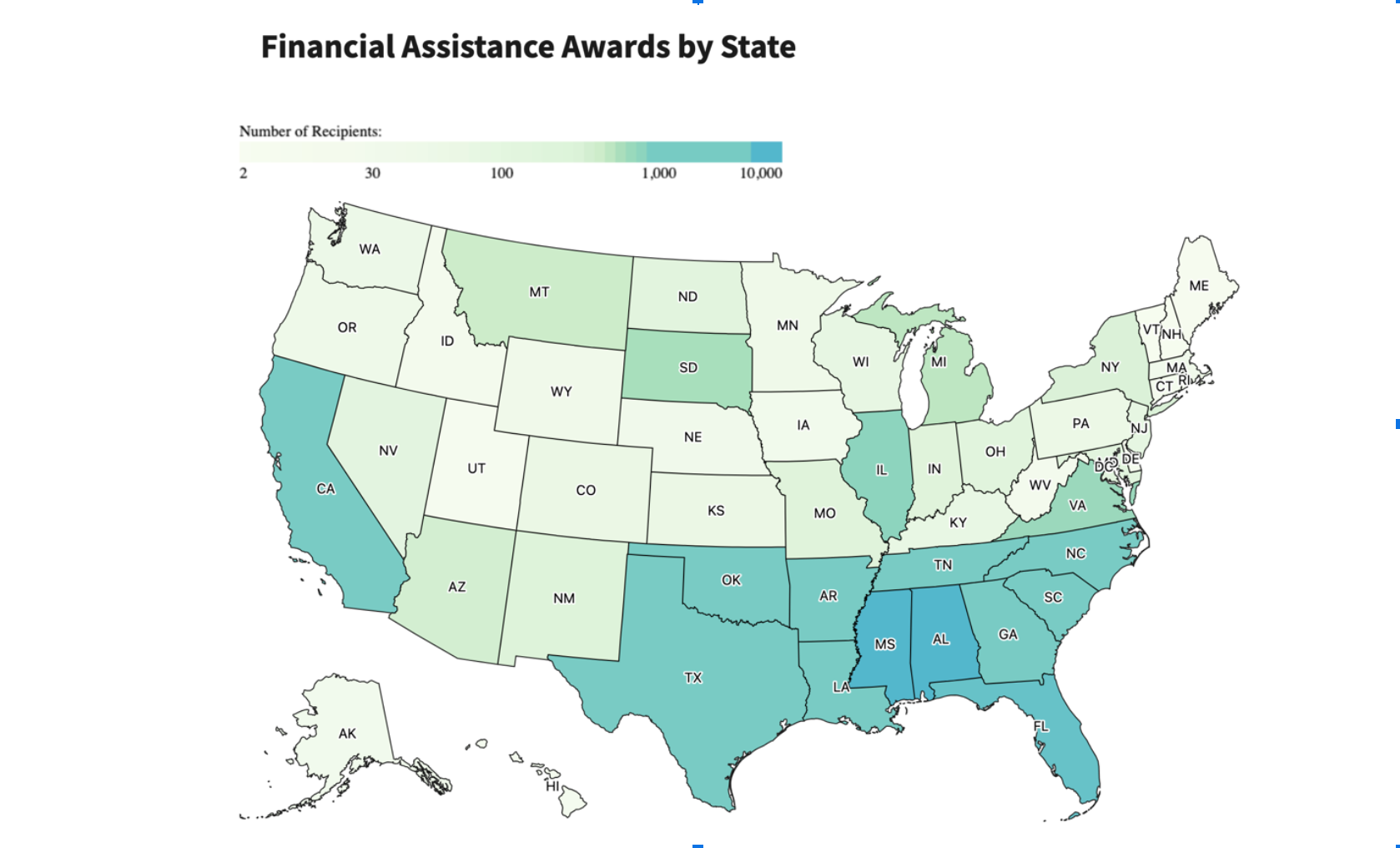
In late July, USDA awarded $2 billion in aid to over 43,000 minority farmers and ranchers across the country who've long endured the sting of discrimination under USDA's farm- loan programs. This initiative, known as the Discrimination Financial Assistance Program (DFAP), began accepting applications in July 2023, and concluded in January 2024. The program's roots trace back to the Inflation Reduction Act's Section 22007, crafted as a corrective measure after an earlier discrimination-relief effort for Black farmers was halted by federal court order following a lawsuit filed by White farmers. A staggering number of over 58,000 applications were submitted, reflecting the deep-seated issues within the USDA system. Additionally, more than 24,000 producers hailed from Mississippi and Alabama—states where racial disparities are still deeply felt to this day.
President Joe Biden highlighted the systemic obstacles that historically hindered many minorities from securing USDA loans. He expressed a strong commitment to addressing these inequalities, stating, "For too long, numerous farmers and ranchers were unfairly marginalized in farm loan programs, lacking equal access to federal resources and support. Upon assuming the presidency, I pledged to address these disparities. The Inflation Reduction Act represents a major step forward in rectifying the injustices that have long plagued the agricultural sector. With these new measures, more farmers and ranchers will be able to maintain their livelihoods, stimulate economic growth, and realize their dreams."
Secretary of Agriculture Tom Vilsack reflected on the program's significance. “The completion of the Discrimination Financial Assistance Program marks a crucial milestone in USDA’s evolution and in our endeavor to transform into a department that truly serves every individual aspiring to engage in agriculture. While this financial aid doesn't compensate for the losses or suffering endured, it acknowledges the injustice. My hope is that it enables many farmers to keep their farms, bolster our nation's food supply, and continue their cherished work in agriculture.”
I see this action as a step in the right direction, but more can be done and more should be done.
More information about the awards, including geographic distribution, can be found on the program website, 22007apply.gov.
To learn more about USDA’s equity work and resources, visit www.usda.gov/equity.